In January 2025, a little-known Hangzhou startup wiped a chunk off Nvidia’s market cap with one model release. A year on, the question this DeepSeek AI review 2026 sets out to answer is simpler and more practical: now that the panic has cooled and V4 is out, is DeepSeek actually good enough to use every day — and is it safe to?
Short version: the technology is genuinely impressive and absurdly cheap, the consumer app is free with no catch, and the privacy story is a real problem you should not wave away. Let’s get into the detail.
What Is DeepSeek?
DeepSeek is a Chinese AI lab founded in 2023, spun out of a quantitative hedge fund. It builds large language models — the same family of tech behind ChatGPT and Claude — and gives most of them away as open weights, meaning anyone can download, run, and modify them. That’s the part that rattled the industry. While American labs spent billions, DeepSeek claimed it trained its R1 reasoning model in about two months for under $6 million, on lower-tier Nvidia chips.
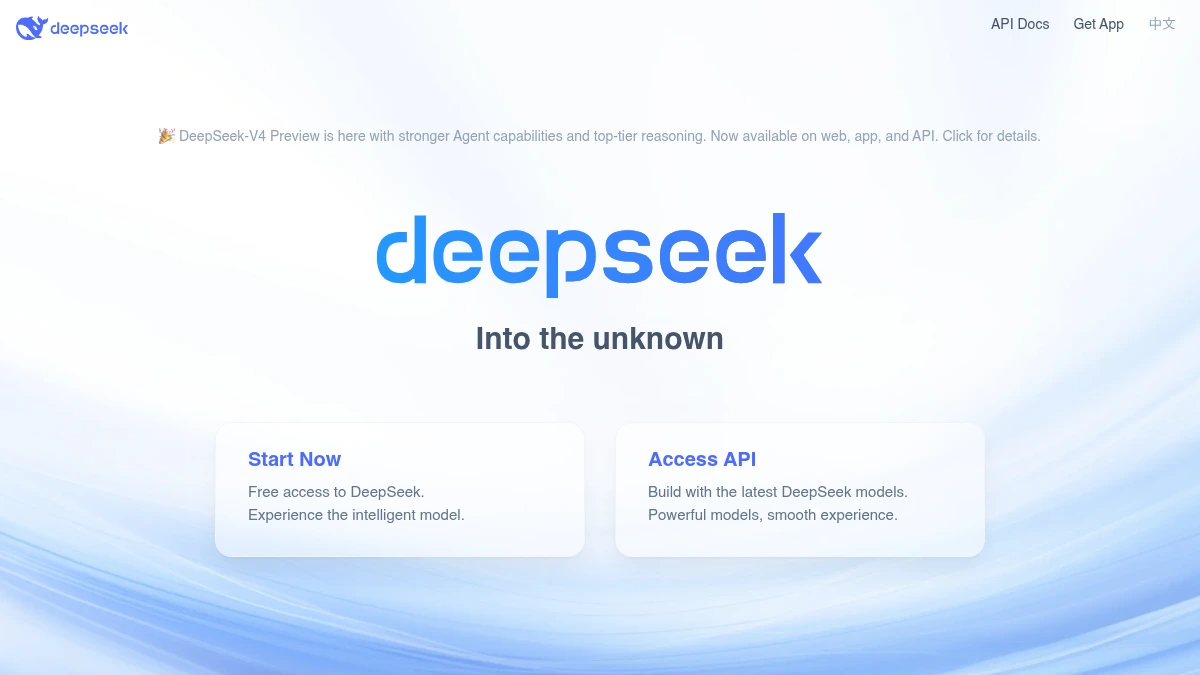
You can use DeepSeek three ways: the free web chat at chat.deepseek.com, the free mobile app, or the paid API for developers. For most people reading this, “DeepSeek” means the chatbot — a fast, capable assistant that competes head-on with the big paid AI assistants for the price of nothing.
The catch, and there’s a real one, is where your data goes. More on that below.
Key Features: What DeepSeek V4 Actually Brings
The headline of any DeepSeek V4 features list this year is the V4 family, previewed on April 24, 2026 in two flavours: V4 Flash and V4 Pro. Both are mixture-of-experts models, which means they only fire up the slice of the network a task needs instead of the whole thing. That’s the trick behind the low running costs.
Here’s what stands out:
- A 1 million-token context window. You can drop an entire codebase or a stack of long PDFs into a single prompt and the model holds it all. For comparison, that’s roughly 750,000 words in one go.
- Hybrid Attention Architecture. DeepSeek’s own term for a redesign that helps the model remember earlier parts of a long conversation without choking on cost. In practice it means fewer “wait, what were we talking about” moments deep into a chat.
- Strong reasoning and agentic skills. V4 leans hard into multi-step tasks and tool use — writing and running code, acting on your behalf across steps. DeepSeek says it tuned V4 to play nicely with agent setups, so it slots in well for anyone building with AI coding tools.
- Open weights. DeepSeek published the V4 weights on Hugging Face, so developers can self-host. That matters more than it sounds, and we’ll come back to why.
- Huawei Ascend support. V4 is DeepSeek’s first model tuned for Chinese-made Ascend chips, not just Nvidia. Geopolitically loud; for you, mostly invisible.
Is it a frontier model? On the company’s framing and early third-party takes, V4 closes the gap with the best closed models from OpenAI, Anthropic, and Google. That’s a big claim, and full independent benchmarks were still landing at launch. Treat “matches the frontier” as “very close, in the same league” rather than “beats everyone.”
How It Works (A Hands-On Look)
Using the app is about as plain as it gets. Open chat.deepseek.com or the mobile app, type, and you’re talking to V4 Flash by default. There’s no onboarding maze, no upsell wall.
The one control worth knowing is the DeepThink toggle. Flip it on and the model switches into a slower, show-its-working reasoning mode that’s better for maths, logic, and tricky code. Leave it off for quick answers. It’s a cleaner version of the “fast vs thinking” split you see on rival apps.
File uploads, long documents, and extended chats are all open on the free tier — no paywall. The trade-off shows up under load. During peak hours you’ll hit “Server Busy” messages and have to retry. It’s the price of free at this scale, and it’s the single most common gripe you’ll see from regular users.
For developers, getting started is a five-minute job: sign up, grab an API key, point your existing OpenAI-style code at DeepSeek’s endpoint, and you’re running. The API even supports popular agent tools out of the box.
DeepSeek Pricing 2026: Plans, API Costs, and the Free Tier
This is where DeepSeek pricing 2026 stops being interesting and starts being ridiculous. There is no “Plus” plan, no Pro subscription, no monthly fee for the chatbot at all.
Consumer (web + app): Free. No tiers, no card, no upgrade nag. The only limit is fair-use throttling during busy periods. Stack that against the going rate for the Western pack — ChatGPT Plus, Claude Pro, Gemini Advanced and friends each run about $20/month (roughly ₹1,700) — and DeepSeek delivers a frontier-class assistant for ₹0.
Developers (API): Pay-per-token, and it’s the cheapest at the frontier.
| Plan | Best for | Indicative cost (per 1M tokens) |
|---|---|---|
| V4 Flash | Default model, high-volume work | ~$0.14 input / ~$0.28 output; cached input ~$0.0028 |
| V4 Pro | Hardest reasoning, the 1.6T-param flagship | Launch promo ~$0.435 / ~$0.87; rises after the promo window |
| Free grant | Testing the API | ~5 million free tokens on signup, no credit card |
To put the Flash rate in perspective: a developer making 10,000 calls a month at 1,000 tokens each spends a few dollars total. That’s an order of magnitude below comparable models from the US labs, and the automatic prompt caching pushes repeat-prompt costs down further.
Two honest footnotes. The V4 Pro promo pricing is temporary and steps up meaningfully once the launch window closes, so budget for the standard rate, not the discount. And published API figures have shifted between sources this year, so check the live pricing page before you wire it into a billing model.
Value verdict: for raw cost-per-output, nothing mainstream beats it. If money is the only axis, DeepSeek wins outright.
Is DeepSeek Safe? Privacy, Censorship, and the China Question
So we’ve got a free, frontier-ish, brilliantly cheap assistant. Where’s the catch? Right here.
By its own privacy policy, DeepSeek stores user data — your prompts, uploaded files, account and device details, even keystroke patterns — on servers in China. Other chatbots collect similar data; the difference is jurisdiction. Data held in China can be legally accessed by Chinese authorities. That’s not a conspiracy theory, it’s a legal reality, and it’s why the bans piled up.
The list is long: Italy, Australia, Taiwan, South Korea and the Czech Republic restricted it in government settings, and several US agencies blocked it outright. India’s finance ministry advised staff against using DeepSeek (and ChatGPT) for official work, citing document confidentiality. Security researchers also flagged a database exposure and app vulnerabilities through 2025–26.
Then there’s censorship. On topics sensitive to the Chinese state, DeepSeek refuses or deflects at a high rate, and — this is the part people miss — that bias is baked into the weights, so it persists even if you self-host to fix the privacy problem. You get your data back; you don’t get neutral answers on those subjects.
What does this mean in practice? For casual, non-sensitive use on a personal device — drafting an email, debugging a script, summarising notes — the risk is low and the tool is excellent. For anything confidential, regulated, work-related, or politically sensitive, keep it off DeepSeek’s hosted apps. If you love the model and need privacy, run the open weights yourself or through a non-Chinese hosting provider, and accept the censorship stays.
Is It Worth It? Pros and Cons
Pros
- Frontier-class performance at the lowest cost in the market
- Genuinely free, fully featured consumer app
- Huge 1M-token context and strong coding/agentic chops
- Open weights you can download and self-host
- Dead-simple, OpenAI-compatible API
Cons
- Data stored in China; serious privacy and jurisdiction concerns
- Built-in censorship on China-sensitive topics, even when self-hosted
- “Server Busy” throttling during peak hours
- Documented security incidents and government bans
- Not a multimodal all-rounder — no native image generation
DeepSeek vs Alternatives: ChatGPT, Claude, and Gemini
Run the DeepSeek vs ChatGPT comparison and the split is clear. ChatGPT is the more polished, more trusted product with a deeper feature set, native image generation, and US data handling — but you pay for the good stuff, and its API costs many times more. DeepSeek matches it closely on text and coding for a fraction of the price, while losing on ecosystem, trust, and image work, which still belongs to dedicated image generators and the likes of ChatGPT.
Against Claude, DeepSeek competes on coding and reasoning and undercuts it hard on price, while Claude keeps an edge on careful, long-form writing and on safety/governance — a real factor for businesses. Against Gemini, you’re weighing DeepSeek’s cost and openness versus Google’s tight integration with Search, Workspace, and Android, plus a generous free tier of its own.
The honest framing: DeepSeek wins on price and openness, the Western trio win on trust, polish, and data jurisdiction. If you want an open-weight model without the China question entirely, Meta’s Llama is the usual fallback.
Who Should Use It?
- Developers and indie builders running high volumes who need cost control and don’t touch sensitive data: yes, easily.
- Students, hobbyists, and curious users wanting a free, powerful assistant for everyday, non-confidential tasks: yes, with eyes open about privacy.
- Anyone handling confidential, regulated, or work data; government and enterprise users; or people who need unbiased answers on geopolitics: no — or only via self-hosted weights, with the censorship caveat.
DeepSeek AI Review 2026: Final Verdict
Rating: 4 / 5.
DeepSeek is the most disruptive value in AI right now, and that’s not hype — it’s arithmetic. The V4 models are fast, capable, and cheap to the point of embarrassing the field, and the free app genuinely rivals tools you’d otherwise pay for. The half-star it loses isn’t about quality. It’s the privacy and censorship baggage, which is significant enough to make it the wrong default for anyone touching sensitive information.
So here’s the call. If you’re cost-driven and your work isn’t confidential, make DeepSeek your daily driver and enjoy the savings. If privacy is non-negotiable, either self-host the open weights or stick with a Western model. The next step is easy and free: open the app, run your real tasks through it for a week, and decide for yourself — just keep the confidential stuff out of it.
FAQs
Is DeepSeek free to use? Yes. The web chat and mobile app are completely free with no subscription tiers. Only the developer API is paid, and even that includes a free token grant on signup.
What’s new in DeepSeek V4? V4 launched in April 2026 in Flash and Pro versions, both with a 1 million-token context window, a new Hybrid Attention design, stronger reasoning and agentic abilities, and support for Huawei Ascend chips. The weights are open.
Is DeepSeek safe to use? For casual, non-sensitive tasks on a personal device, the practical risk is low. For confidential, work, or regulated data, no — DeepSeek stores data on servers in China, and multiple governments have restricted it. Self-hosting fixes privacy but not the built-in censorship.
Is DeepSeek better than ChatGPT? On price, by a mile. On text and coding quality, it’s close. ChatGPT still leads on polish, image generation, ecosystem, and data trust. Which one “wins” depends on whether cost or trust matters more to you.
Can I run DeepSeek without sending data to China? Yes — because the weights are open, you can self-host V4 or use a non-Chinese hosting provider. That keeps your data local, but the model’s censorship on China-sensitive topics remains.